What’s the secret sauce that makes customers stop, stare, and buy? It’s not just having a great
Whether you’re running a cozy boutique or a bustling online store, the way you display your goods can make or break your sales numbers. This is the art and science of merchandising, and it’s one of the most powerful tools in a small business owner’s toolkit.
So, what is merchandising exactly? At its core, it’s the strategic promotion and display of products to stimulate interest and entice customers to make a purchase. It’s about getting the right product, in the right place, at the right time, and at the right price.
However, merchandising goes beyond just putting items on a shelf or a webpage. It’s about storytelling, psychology, and creating an experience that resonates with your shoppers.
In this blog post, we’re going to dive deep into the world of product merchandising. We’ll cover everything from the basics of what is merchandising in retail? to the
Whether you have a physical location, an ecommerce site, or both, mastering these strategies is key to driving sales and attracting loyal customers.
What Is Merchandising in Retail?
You might hear the term thrown around often, but what is the merchandise strategy really about?
In a retail context, merchandising is the overarching strategy used to sell inventory. It encompasses everything from product selection and pricing to the physical or digital layout of your store.
General Merchandising
Think of general merchandising as the big picture. It’s the master plan. It involves analyzing sales data, understanding customer behavior, and making informed decisions about what stock to carry. It’s about ensuring you have enough inventory to meet demand without overstocking.
Successful general merchandising means you are constantly adapting to market trends and customer preferences.
Seasonal Merchandising
Timing is everything. Seasonal merchandising aligns your product offerings and displays with specific times of the year.
Think about how stores transform in late October. Suddenly, everything is orange and black, candy is front and center, and costumes are everywhere. That’s seasonal merchandising in action.
Seasonal merchandising taps into the excitement of holidays, weather changes, and cultural events to drive urgency and relevance.
Media products also have merchandising cycles. For instance, the release of a new Disney movie is often accompanied by a wide range of products related to that film.
All of these merchandising strategies are carefully timed and engineered to optimize product sales throughout the year. Merchandising is not just about one single product, but is a

Seasonal merchandising applies to online stores, too
Retail Merchandising
So, what is a retail merchandiser focusing on
Retail merchandising specifically refers to the strategies used within a physical store to maximize sales. This involves floor plans, aisle width, shelf placement, and signage. It’s about guiding the customer through the store in a way that exposes them to the maximum amount of product.
Have you ever noticed that milk and eggs are usually at the back of the grocery store? That’s a classic retail merchandising tactic to get you to walk past thousands of other items first!
Ecommerce Merchandising
The principles remain the same, but the execution changes online. It’s about optimizing website layout, site search, and product recommendations to replicate the helpfulness of an
In ecommerce merchandising, the emphasis is placed on website layout and page displays, rather than physical displays.
For an ecommerce store,
Ecommerce merchandising is also about making the website intuitive and easy to navigate. Users should be able to easily locate items that they are interested in. Some websites might use banner ads promoting certain items in their store. Or the website may use intuitive search results.
Another common form of ecommerce merchandising is the use of linking opportunities between associated items. This is a form of virtual bundling.
Suppose you run an ecommerce store that sells sports equipment. A customer who is browsing baseball gloves on your website might also be interested in baseball bats, cleats, or other baseball equipment. Providing linking opportunities to these items on relevant product pages is an essential part of ecommerce merchandising.
Visual Merchandising
This is where creativity meets commerce.
What is visual merchandising? It’s the practice of optimizing the presentation of products and services to better highlight their features and benefits.
Visual merchandising is the wow factor that grabs attention. It includes everything from lighting and color schemes to floor plans, product design, and digital design elements.
Any visual component that makes it easier for customers to identify and purchase an item is visual merchandising.
Another common strategy for visual merchandising is bundling. Bundling refers to the grouping of certain products together based on common or shared usages. For instance, a common bundle in spring might feature an array of gardening equipment.
Types of Merchandising
Merchandising isn’t a
Visual Merchandising
If you have a
Effective visual merchandising increases foot traffic and encourages impulse buys.
Elements of visual merchandising:
- Store layout: The traffic flow and arrangement of fixtures.
- Window displays: Your first impression on the street.
In-store displays: Mannequins,end-caps, and tables.- Signage: Pricing, promotions, and directional signs.
Here’s an example of visual merchandising: Imagine walking past a clothing store. The window display features a cozy winter scene with mannequins layered in the latest scarves and coats, surrounded by fake snow and warm lighting. You instantly feel the vibe and want to buy that coat. That is effective visual merchandising.
Online Merchandising
For the digital entrepreneurs, what is to merchandise online involves a different set of tools but the same goal: conversion.
Online merchandising creates a seamless path to purchase. In a world where competitors are just a click away, a
Elements of online merchandising:
- Website layout: Navigation menus and category structures.
- Product photography:
High-res images and360-degree views. - Product descriptions: Persuasive copy and specs.
- Site search: Filters and predictive search bars.
Here’s an example of online merchandising: You visit a shoe website. The homepage features a Summer Essentials collection. You click through and can easily filter by size and color. The product page has crisp photos showing the shoe from every angle, and a Complete the Look section suggests matching socks. That’s online merchandising at work.

Website layout is an important element of online merchandising
Key Elements of Effective Visual Merchandising
If you want to master the what is merchandising in retail industry standards, you need to nail these physical elements.
Store Layout and Design
Your floor plan dictates how customers shop. A grid layout (like a grocery store) is efficient, while a loop layout guides customers on a specific path past curated merchandise.
- Create a logical flow: Ensure aisles are wide enough and the path is intuitive.
- Optimize space: Place
high-margin or impulse items at eye level or near the checkout counter (the cash wrap).
Window Displays
Your window is your billboard. It needs to stop people in their tracks.
- Attract customers: Use bold colors, interesting props, and clear focal points.
- Tell a story: Don’t just clutter the window with product. Create a scene or a theme (e.g., Back to School Cool or Summer Beach Party).
In-Store Displays
Once they are inside, keep the momentum going.
- Highlight specific products: Use speed
bumps—displays placed in the middle ofaisles—to slow customers down and draw attention to new arrivals. - Visually appealing: Use the rule of three when arranging items (grouping items in odd numbers is visually more pleasing).
Signage and Graphics
Don’t make customers guess the price or the promo.
- Inform: Clear, legible signage helps customers make decisions quickly.
- Reinforce brand messaging: Use your brand fonts and colors. A sign isn’t just a price tag; it’s a brand touchpoint.
Lighting
Lighting sets the mood and directs the eye.
- Atmosphere: For example, warm lighting creates a cozy feel, while cool lighting feels modern and clean.
- Highlighting: Use spotlights to make key products pop off the shelf.
Sensory Experience
Physical retail has one huge advantage over online: the senses.
- Music and scent: A curated playlist and a pleasant scent (like vanilla or citrus) can increase dwell time.
- Touch: Encourage customers to pick up products. For example, if you’re wondering what is fashion merchandising?, it relies heavily on the tactile experience of fabrics.
Key Elements of Effective Online Merchandising
Running an ecommerce empire? Here is how to apply the what is a merchandiser mindset to the digital world.
Website Layout and Design
Your website navigation is your store map.
User-friendly : Ensure your menu categories are logical. If you sell apparel, separate Men, Women, and Kids clearly.- Intuitive: Don’t hide your best sellers. Feature them prominently on the homepage.
Product Photography
Online, customers can’t touch the product. Your photos have to do the heavy lifting.
- Best light: Use professional lighting and clean backgrounds.
- High quality: Allow users to zoom in to see textures and details. Show the product in use (lifestyle shots) as well as standalone.

Product photography is vital for online merchandising
Product Descriptions
Don’t just list specs. Sell the benefit.
- Information: Include size charts, materials, and care instructions.
- Compelling copy: Instead of blue cotton shirt, try the
ultra-soft breathable tee you’ll never want to take off.
Site Search
If they can’t find it, they can’t buy it.
- Easy to find: Your search bar should be visible on every page.
- Optimization: Ensure your site search handles typos and synonyms (e.g., showing trousers if someone types pants).
Product Reviews
Social proof builds trust instantly.
- Credibility: 93% of customers read online reviews before buying.
- Encourage reviews: Send
follow-up emails after purchase asking for feedback. Display star ratings clearly on product pages.
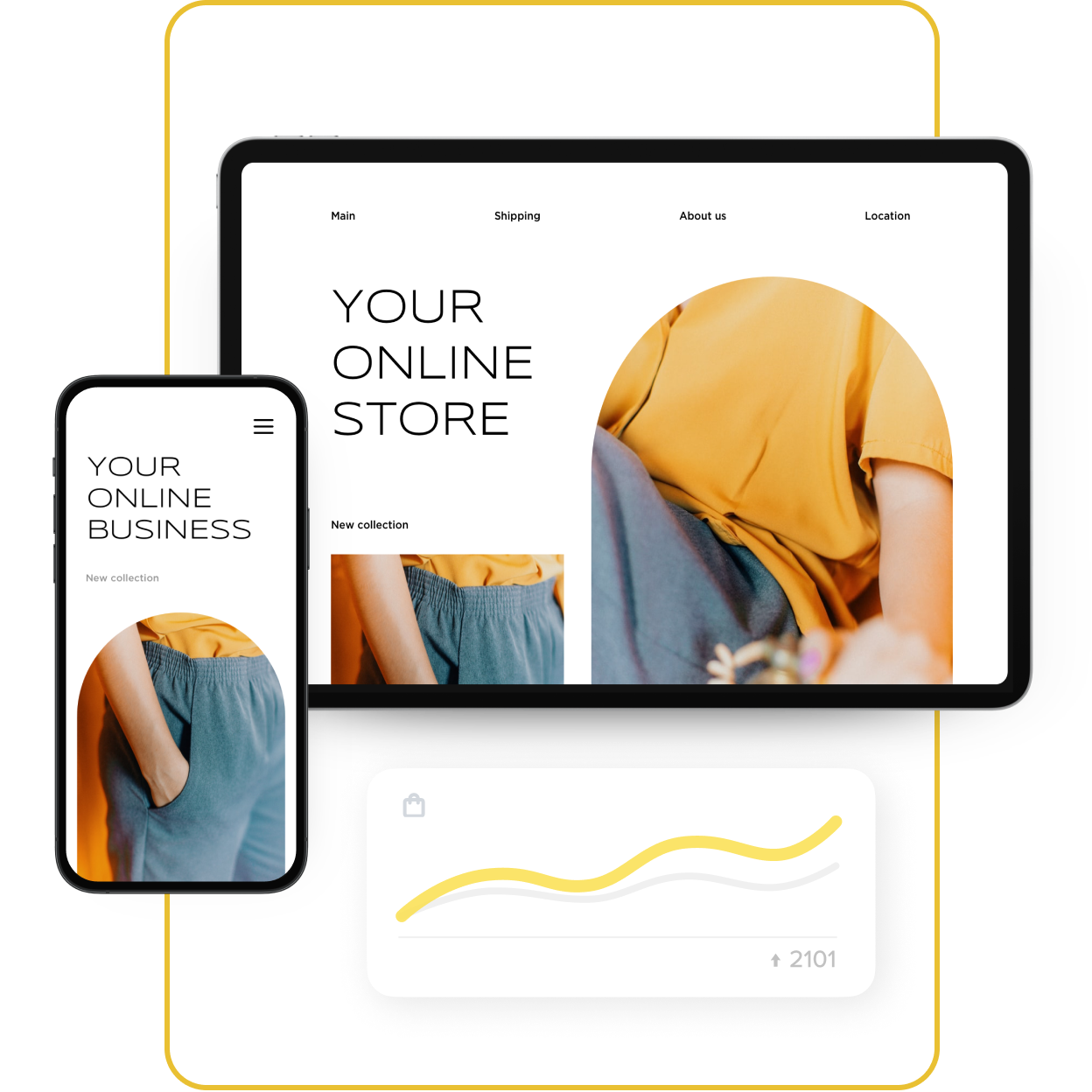
When it comes to online merchandising, picking the right ecommerce platform is key — it directly affects how easily your customers can find and buy your products.
Ecwid by Lightspeed is an ecommerce platform that takes the hassle out of online merchandising, giving you everything you need to build a stunning, successful ecommerce store. Here’s how Ecwid helps you stand out:
- Customizable design themes tailored to your industry, making navigation and shopping on your site a breeze.
AI-powered tools to enhance product photos and craft product descriptions that sell.Built-in customer reviews to boost trust and credibility for your brand.- Seamless integration with top social media platforms to expand your reach and engage more customers.
With Ecwid, you can create a professional online store that’s not only visually stunning but also uses

No matter your niche, Ecwid offers a variety of customizable design themes to help you quickly create a professional business website
Merchandising Best Practices
Whether you are figuring out what is a retail merchandiser doing? in a boutique or managing a massive online catalog, these best practices apply.
Understand Your Target Audience
You can’t sell to everyone. Who is your ideal customer? What is their budget? What is their style?
Tailor your strategy to your audience. If your audience is
Create a Consistent Brand Experience
Your physical store, your website, and your social media should all feel like the same brand.
Reinforce messaging with the same color palette, tone of voice, and imagery across all channels. This builds recognition and trust.
Track Your Results
Merchandising isn’t a set it and forget it task. It’s a science.
Measure the effectiveness of your merchandising. Which window display brought in the most foot traffic? Which homepage banner got the most clicks?
Then, adjust your strategy. Use sales data to pivot. If a product isn’t moving, move it to a different location or change the photo.
Stay Up-to-Date on Trends
Retail moves fast. Fashion merchandising trends change seasonally, but technology trends change even faster.
To keep up, follow industry blogs, attend trade shows, and keep an eye on competitors. Are people buying via social media? Is sustainability a major factor for your customers? Adapt your merchandising to match.
How Does Merchandising Help a Business?
Whether online or
Increased Sales
Most obviously, merchandising leads to more sales. Merchandising strategies are optimized to draw customer attention to products of interest. Merchandising does not just make products easier to locate. Effective visual merchandising can also make products appear more appealing to customers, increasing sales even more.
Move Inventory at Faster Rates
Cyclical merchandising schedules rely on high inventory turnover. Stores want to sell as many winter items as possible before the start of spring, and so on. Merchandising helps sell promotional and seasonal items more quickly during the periods of highest demand.
Improved Customer Satisfaction
Merchandising strategies are also designed to optimize the customer experience. Visual displays, intuitive store or website layouts, and product bundling all help customers find what they need.
Customers can shop more efficiently, and may even end up buying more items, when their shopping experience is made easier. This often means they will check out feeling more satisfied with the products they are purchasing.
More Loyal Customers
That improved customer experience makes customers more likely to return to your business later on. This continues the cycle of a higher volume of sales, faster inventory turnover, and improved customer satisfaction.
Product Merchandising: Key Takeaways
So, what is merchandising? It’s the bridge between your product and your customer’s wallet. It’s the strategic blend of psychology, design, and data that turns inventory into revenue.
We’ve covered a lot of ground, from defining what is visual merchandising? to exploring the digital tactics of ecommerce.
Remember, whether you are a retail merchandiser arranging a shelf or a business owner tweaking a landing page, the goal is the same: to create a shopping experience that is easy, enjoyable, and irresistible.
Don’t let your great products sit unnoticed. Start implementing these strategies today. Look at your store with fresh eyes. Is the layout logical? Are the displays captivating? Is your website easy to navigate? Small tweaks can lead to massive results.
If you run an online store, you need an ecommerce platform that makes online merchandising a
If you would like to learn more about ecommerce merchandising, read Ecwid’s guide to creating effective product pages for your online store.
- How to Fix Your Store’s Navigation
- Everything You Need to Know About Product Merchandising
- Online Merchandising: How to Layout Products in Online Store
- What is Fashion Merchandising, and Why Is It So Important?
- 10 Design Mistakes of Online Stores
- 15 Perfect Font Pairings for Your Ecommerce Website
- Color Theory: Everything You Need to Know about Color Themes
- 7 Creative Ideas for Your Ecommerce Product Page
- The Power of a Hero Image in Web Design
Must-Have UX Principles to Follow in an Online Store- Website Design Audit
- Unlocking the Power of UX Design for Ecommerce
- What’s the Difference Between UI and UX in Ecommerce?